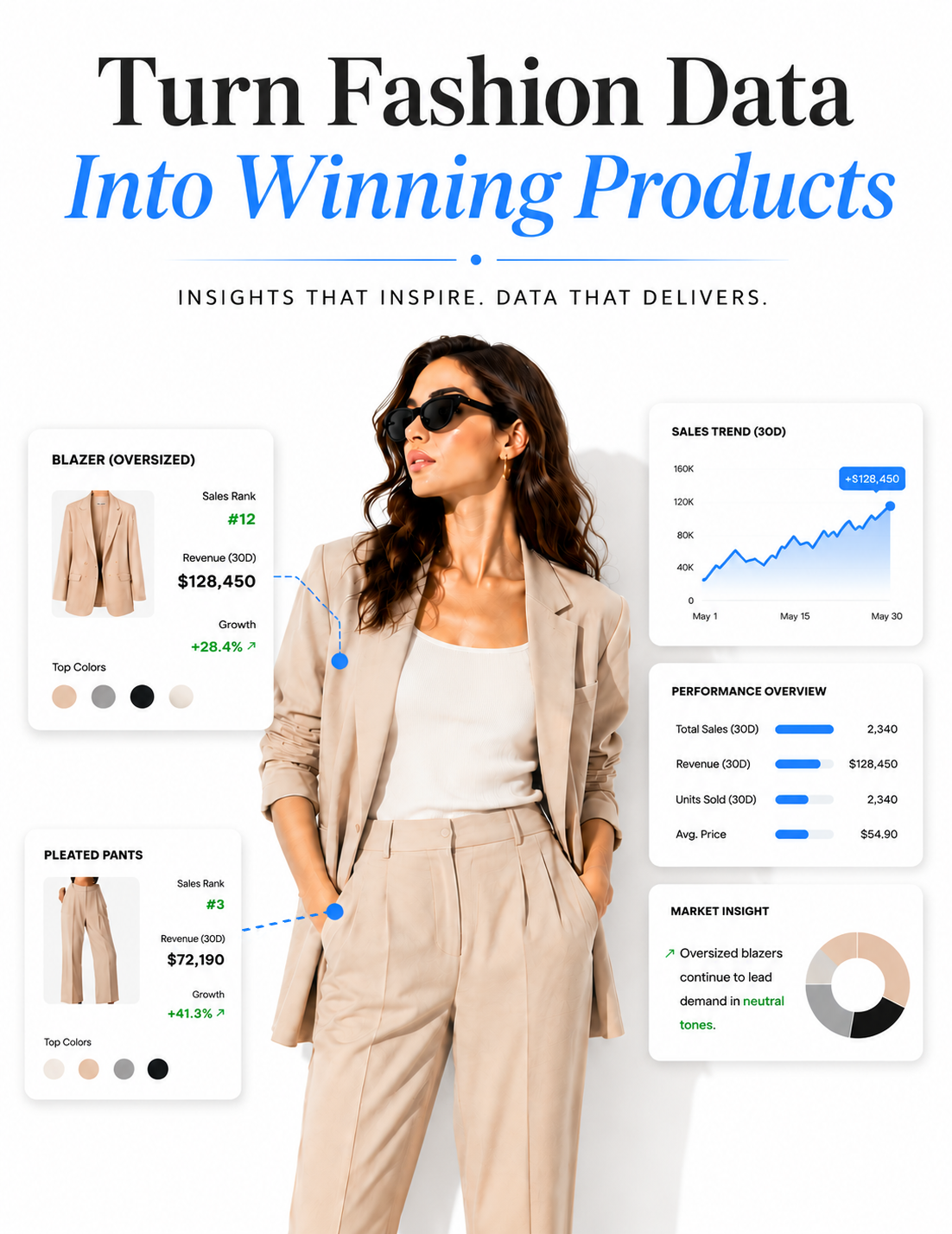

A product that you consider a top seller can slowly but surely become unprofitable. For example, a shirt can go well only in medium while getting no buyers in small size. Full price can easily be sold through in one color; in a different color, it is only taken away during the end-of-season sale discount. This is a typical problem in variant economics when you have one main variant that generates the revenue, while other variants are loss leaders. You should consider size, color, as well as design variations if that is an area of a product for which you carry several types or combinations. Here, we'll explain to you how to create a variant profitability matrix, categorize your SKUs into action groups, and dispose of overstock items before they start eroding your bottom line.
Revenue Hides What Is Really Happening
One product page's net revenue figures may give an altogether wrong idea even when the total figure looks nice, while some other variants may be doing much worse. A very popular colorway could be carrying the whole product line. Other color combinations can barely break even once returns and shipping charges have been accounted for.
What Contribution Really Means
In fact, "contribution" does not equate to "revenue". In order to arrive at an accurate figure, deduct the following items from your net revenue:
- Product cost and landed cost
- Discounts given at time of sale
- Returns and restocking fees
- Fulfillment and shipping cost
- Marketing expenses specific to a product variant
To make sense of the variant profitability of your inventory, you will need to subtract the above costs so as to know which sizes and colors are making money for your store.
Build a Variant Profitability View
Your primary role is to link together the data sources so that the story behind each SKU is completely unveiled.
Join Your Core Data Sources
- Orders and sales records broken down by SKU
- Stock level and inventory history
- Promo codes and discounts applied
- Returns and refunds details
- Landed and product cost in USD
- Fees from fulfillment, including third-party shipping
- Ad spend directed at a particular variant or set/combination of products
Q: How do I make sure the numbers are fair across variants?
You will need to use the same time frame for any SKU you analyze. Obviously, the variant that came out two weeks ago will always look weaker side by side with the one that has been selling for six months.
You should also consider factors like lack of stock. When a size runs out in the first week, it does NOT mean that the buyers lost their interest. It sold out because the supply got exhausted.
| Variant | Units Sold | Net Revenue | Returns Rate | Contribution Margin |
|---|---|---|---|---|
| Black, Medium | 420 | $12,600 | 4% | Strong |
| Blue, Small | 90 | $2,250 | 18% | Weak |
| Red, Large | 260 | $7,800 | 6% | Moderate |
By analyzing a simple table like this, based on your data, you get a quick overview of profit situations. The profit sits in some areas and does not sit in others.
Segment Variants Into Four Decisions
After getting contribution figures, put each variant in one of the four groups to be able to turn data into action.
The Four Groups
- Scale: your product has a good margin and a good level of demand, a situation that can be repeated, i.e., buy more with confidence.
- Protect or test: although the numbers look good, the sample size may be too small, or the supply has been too limited so far. Before you make your decision, give it a fair test opportunity.
- Reposition: buyers might like the product, but it is not getting the desired price, has poor photos, or might be targeted at the wrong audience. By changing the product description, a little change might bring in more buyers.
- Exit: This variant has been given the proper test through normal stock level, still not generating the business, and there is no other reason except poor economics. Stop reordering this one now.
This method of classification will prevent you from cutting a variant too early or holding onto one too long.
Add External Evidence Before You Change Inventory
Prior to deciding on a stock change, it might be a good idea to get a look at your surroundings and see what is happening beyond your own little world.

What to Check Outside Your Store
- Market trend of the style, fabric, or color
- Competitors' assortment and which sizes/colors they do actually stock
- How much different brands charge for their similar products?
- Customer complaints reflected in the reviews regarding fabric, size
- Popularity of different influencers promoting different styles
One point to consider: a product listing with a competitor that's available on the website doesn't show how well he's selling that product. It is important that external indicators are used to complement the company's figures and not as a substitute.
Reallocate Ad Spend With Care
In fact, advertising budget is closely aligned with what the customer wants. However, it must not be mismanaged.
Where Ad Spend Gets Wasted
- Attracting people to a size out of stock
- Buying ads in a variant that has low or negative profitability
- Creating one ad that will be used for several sizes, though only a couple of them are available
How to Fix It
Build product sets or feeds that show live inventory. Present the product as what is actually available. Don't trust a single before and after comparison if you wish to know whether the changed spend led you to an increase in sales. In that case, compare the test group with the holdout group during the same period.
Choose the Right Dead Stock Action
Your dead stock doesn't automatically mean a total loss. Your decision should be based on the economics of that SKU and how your brand might be affected if you make the wrong choice.

Options Worth Weighing
This decision requires taking into account different options:
- Make a bundle: Combine two slow-merchandise products or even a slow-merchandise one and a bestseller at a combined price.
- Change the style/alter the trim, print, change the way things are packed and resell.
- Market afresh to former visitors by a new offer
- Transfer: Shift the stock to a store or channel that can better sell it
- Discount: Lower the price in a planned manner instead of slashing the price altogether
- Wholesale: Sell in bulk to a discount buyer
- Donate or Recycle: Do that if your resale value is about zero
- Discontinue: You stop producing and wait until the leftover stock is sold out naturally
There are many reasons not to destroy inventory unless you have no other options. In fact, many regions nowadays have regulations that forbid burning or landfilling unsold apparel; thus, it would be wise for you to figure out whether such rules apply to your location before making a burning decision.
Use Garmio to Improve the Next Buy
Dealing away today's dead stock is a big relief, but buying a smarter collection for the upcoming collection is a more rewarding endeavor.
What This Looks Like in Practice
Garmio combines competitor pricing, trend direction, customer reviews, and influencer signals, so you won't be guessing when it comes to your next order.
The AI-based design change tools of the app can come to your aid if you find out a certain color or fit is still underperforming. They can test a new trim, print, or silhouette direction based on buyer feedback in reviews and social posts.
FAQ
What is an apparel variant?
In simple terms, a variant of a product can be a small change or different feature of the product. Usually, it includes changes in the design, color, or sizes. In many ways, these different features or options that change are treated by the shops as different SKUs.
How do I calculate SKU profitability?
If we consider the net revenue, which is basically the money your business gets from sales minus its expenses, as a reference point, the SKU profitability is determined in this manner: You subtract product cost, discounts, returns, and fulfillment fees from that revenue, and add a fair share of marketing cost too.
What causes dead stock in fashion?
Certain errors in forecasting, drastic trend changes, too numerous choices for the product variants, issues with product fits, bad quality, wrong positioning, high minimum orders, and slow deliveries from suppliers are just a few contributing factors to dead stock.
Should I stop ads for every slow-selling variant?
No, first of all, you should double-check if there are any stocks left. In the absence of stock, there is no point in running ads. Also, look at your data for sales. Do you have sufficient or adequate sales data from that product? Take into account the season and marginal profit as well.
How can competitor data improve variant decisions?
We all know that competitors are our biggest benchmark to measure ourselves. Competitor data can be a good support as it lets us know what other players are offering in the marketplace in terms of the product range, price, special promotions, packaging, etc.
How does Garmio support inventory decisions?
Garmio goes beyond the raw SKU-level data. You will get insights related to product trends, competitive pricing, customer reviews, and influencer activities. All of these data points together, along with your own SKUs, will give you a very robust decision-making toolkit before any next procurement decision.
Related Reading
- How Fashion Brands Can Reduce Fit-Related Returns
- How to Find Profitable Fashion Niches with Competitor Data
- Micro-Collections Made Easy: How Garmio Helps You Design and Source Fast with Low MOQ Suppliers
- Social Commerce Secrets: How to Uncover Viral Instagram Aesthetics and Turn Feed Traffic into Sales
- Stuck at a 1.5% Conversion Rate? 5 Fast Ways to Turn "Window Shoppers" into Buyers with Visual Style
Written by Garmio
Garmio provides fashion market intelligence for sellers who need clearer product, trend, influencer, and competitor signals before making inventory decisions.
Editorial note: This content supports research and decision-making. It does not guarantee sales, forecasts, fit outcomes, return reductions, or business results.