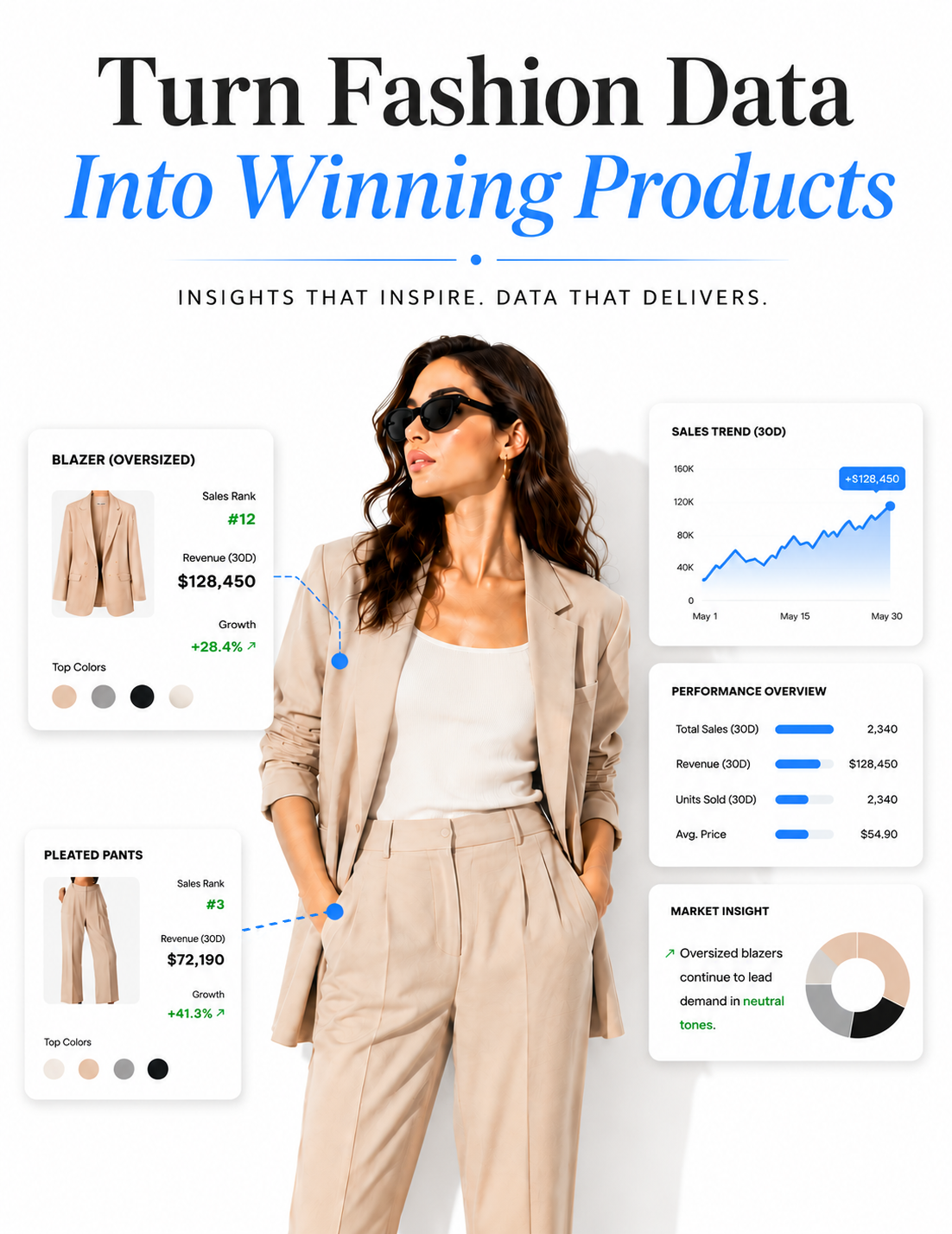

You look at your dashboard and see a 1.5% conversion rate. Is that a good or bad result? Honestly, it depends. In fashion, the e-commerce conversion rate varies depending on the source of your traffic, the shopper device type, as well as what you are selling. A 1.5% conversion rate in social cold ads is a very different one coming from branded search traffic. So before making any change to your product page, analyze your data and segment it on the basis of device, channel, new vs returning visitors, category, and geography. The moment you identify a problem area, you can pick the appropriate solution rather than guessing.

This article covers five ways in which visual merchandising can be employed to drive a change of heart in potential customers and actually lead them to purchase, besides suggesting ways in which each experiment should be conducted in order for the result to mean something.
Test 1 — Curate by customer intent, not just category
Customers do not usually browse based on category only. They buy based on need or requirement: a party dress for a guest of honor, the first office clothes for a fresh graduate to wear to work, etc. You should make customers understand what you are trying to say by using a narrative based around needs and not just by showing them a category listing
- Fashion different editions with a theme like Weekend brunch wear or Office wear
- You may also have collections by design and trend styles, like, for instance, Minimalist, or even one that is beachy, so the customer could decide what they want
- If you have clothes that can be used as gift-wrapping or are made from unusual fabrics, then you may put together a special collection for customers with those interests
- Set up price-based edits so lower budget shoppers know what their choices are
Your landing page must match the ad that your customer has seen either from an influencer or a video ad. If a customer is taken to a generic category page after clicking from an outfit featured in a YouTube clip, then they would have been left hanging and would be highly unlikely to make the purchase. A discrepancy between the promised deliverable and the landing page is one of the biggest causes of a lost buyer and a lost business opportunity.
Test 2 — Show complete looks with clear product relationships
A product picture alone is a challenge for the customer to come up with the remaining clothes needed to complete the ensemble. A module on the product page showing an outfit style of the item as part of a complete ensemble would answer her/his request quickly
- You may add an outfit feature as part of your product page so that the customer styles an item with two or three complementary articles
- Make sure the hero piece is easy to recognize and that it's possible to add it to the shopper's cart on its own
- Display complementary items but do not try to push bundle purchases as a tactic
Before displaying a look that links to a combination, take time to know what is available, sizes, and margin. A style of fashion that connects the shopper to sold-out items or low-margin add-ons will definitely be a net loss rather than a revenue stream. Make sure outfit recommendations are made up of the items you sell frequently and want to stock up more on.
Test 3 — Strengthen visual and product consistency
Consumers instantly compare the thumbnails, your product pages, and your postings on social media networks. Therein, a discrepancy in appearance or color fit will immediately cause consumers to lose confidence in your brand.
- Match color, silhouette, and fabric depiction on thumbnails, product pages, and social media assets.
- Use the same lighting conditions and backdrops throughout a collection to give the impression that they are one line of the same brand items.
- Rearrange your thinking to the fashion product page style of the main competing brands to identify the established practices in a segment and the different ways in which you can make use of a customer's eye.
Consistency does not imply mimicking your competitor's product page or layout. A consistent brand message and look would allow customers to recognize your products at a glance regardless of the place of the first sighting, whether that was a native advertisement, a social media feed, or your website.
Each quarter, carry out just a quick audit, and prioritize fixing the most vulnerable asset first.
Test 4 — Turn review language into confidence content
You know the customers; they express their opinions, and the words they use can be very helpful, e.g., 'I find the fit to be true for size', or 'this item runs small'. Bring these words into your store pages instead of leaving them below the product description.
- Bold review snippets which help buyers decide about size (like true-to-size vs. runs small).
- Bring out the customer comments referring to fabric touch, the use of the garment (for what?), and style hints.
- Add a short 'how to wear' or 'fit guide' that has been taken directly from the reviews.
Do not try to manipulate the rating by either hiding or deleting authentic, negative feedback. Customers prefer a blend of real opinions even if there are only 5-star ones mixed in, while the unspoken grumbles later turn up in the form of returns rather than lost sales.
Test 5 — Build a visual discovery route
Irrational, non-conceptual buyers can't describe what they're looking for before seeing it or finding a look they like. The latter scenario is where they recognize a style they want when they see it.
- Increase click-through and discoverability by providing a picture-centric browsing mode - such as "shop the look" or "shoppers viewed this style"
- Differentiate product images by using a feature "visually similar products" on pages which have low inventory or where an exact match is not available.
- Come up with more selling options by utilizing Garmio visual search throughout your merchandise research and product mix planning phases. You don't even have to commit a budget at this stage since it's just identifying which shapes and designs have potential trends.
The idea of visual-based product search is a bit like the back door to shopping that gives a way even when a normal typed search would have failed completely. This is very important in the case of a mobile device where the customer would rather see and click on a beautiful picture than type out the words describing the look.
Run a clean experiment.
If you want your test to yield accurate results, then you have to start out with a solid foundation.
- Select one hypothesis and one main measurement to test your product before you start
- Define safety metrics so that a win in the short term will not mask a loss in the long term
- Conduct the test long enough to achieve fair samples from your entire traffic mix, not just during your best week
Use this table to keep your metrics organized during a test:
| Metric | What It Tells You |
|---|---|
| Add-to-cart rate | Whether shoppers find the product appealing enough to consider |
| Conversion rate | Whether interest turns into a completed purchase |
| Average order value (AOV) | Whether the change affects basket size |
| Return or keep rate | Whether shoppers keep what they bought |
| Contribution margin | Whether the win holds up after costs |
A single conversion test that also doubles the return percentage isn't really a win. You should monitor conversion, return, basket size, time spent, and search traffic to evaluate your changes before you launch them on your entire store.
How Garmio supports the five tests
It takes some effort to manually go through each one of these five different tests.
Luckily, Garmio supports your research team at each stage, giving them insights and research materials to make their task much easier.
Discover products and trends.
Garmio's insights can help you stay ahead of the curve as you identify upcoming trends in product shapes, colors, styles, etc, so that your product selections can showcase those styles or trends that shoppers are currently looking to purchase.
Analyze competitor presentation and reviews.
Garmio brings competitive product listings and their review patterns in one spot so you can identify where others may be missing or making errors in showing what works and the product look.
Track influencer momentum
Via Garmio, you can tell which styles are getting popular with creators in real time. As a result, your carefully picked outfits will reflect exactly those trends that shoppers will have started seeing already on their social media feeds.
Playing with AI-backed styling
Garmio can suggest stylish and different style pairings from your merchandise, giving your creative team ideas as the first step for their outfit suggestions and for visual discovery routes, respectively.
Optimize the decision, not the vanity metric.
It alone is not sufficient to know your conversion rate - it does not tell you anything about what needs to be changed. Get to the root of it first and then gradually make small changes and check the impact of each one against a specific goal.
Curated selections, complete outfits, a visually appealing website, honest customer reviews, and visual discovery are all factors that can increase a shopper's trust and hence the possibility of them making a purchase.
Are you prepared to develop the next most wanted product page? You should conduct research first with Garmio and make the things you find out about your customers the foundation of your content. Head on over to garmio.ai to begin your journey.
Frequently Asked Questions
What is a good fashion ecommerce conversion rate?
You cannot say what is a "good" number because it varies across different segments and trends. Your own rate of conversion must be measured against your own previous performance.
Is a 1.5% conversion rate bad?
Conversion rate alone is not enough to judge it as a failure. It can be high or low depending on various factors such as device, page category type, product price, customer's geographic location, and whether the number refers to sessions or unique users.
What is visual merchandising in ecommerce?
It is a method of strategically arranging, grouping, and sorting the products and images that shoppers discover, compare, and get information from.
Do outfit recommendations improve conversion?
They mainly help customers decide and reduce their hesitation. Nevertheless, you should not rely solely on conversion as your evaluation criterion because you also need to account for product returns and margins. It is best to test how your outfit recommendations work with your specific audience and analyze the results.
What should a fashion CRO test measure?
Pick one main action metric together with other metrics such as average order value, keep vs. return rate, and contribution margin, which are considered protective metrics. This means that your primary KPI remains intact, but you are still looking after other KPIs which might not affect it directly.
How does Garmio help with fashion conversion research?
Garmio helps you discover products visually, do competitor studies, analyze reviews, track influencers, and get AI-assisted styling tips.
Should I copy a competitor's product page layout?
Instead of blindly copying what another company has done, you should focus on category best practices or what shoppers want from the product page and then create content that's unique to your brand and test it with your own customer group.
Related Reading
- How to Scale Brands with Organic Virality and Garmio's Trend Data
- How to Find Profitable Fashion Niches with Competitor Data
- 15 Best Print-on-Demand Apparel Suppliers for High-Quality Custom Clothing (2026)
- The Hidden Math of Fashion Pricing: How to Price Your Products at 4x COGS (and Actually Sell Out)
- AI for Fashion Brands: How to Choose the Right Retail AI Solution to Scale in 2026
Written by Garmio
Garmio provides fashion market intelligence for sellers who need clearer product, trend, influencer, and competitor signals before making inventory decisions.
Editorial note: This content supports research and decision-making. It does not guarantee sales, forecasts, fit outcomes, return reductions, or business results.