

Jorts are denim shorts. Essentially, it is a combination of "jean shorts." At the moment, the term "jorts" is generally used to describe one particular type of pants a long pair of more spacious denim shorts that are a loose, boyfriend-style kind of clothes.
You need to know and understand that difference if you do garment business or own a shop. Interest in jorts has risen abruptly over these two years, and consumers are entering very specific terms into Google before pressing "add to cart". This article explains what jorts exactly are, the origin of the word, and the current data on search results and sales to show if the phenomenon of jorts is still growing in 2026 and if it needs to be stopped here.
Where the word (and the current style) comes from
"Jorts" is a term that first appeared in the 1990's as slang for jean shorts. OED added it in 2013, and Merriam-Webster came in in 2023, which, in a way, reveals that the word transitioned from a joke to a recognized part of the standard language over the course of nearly ten years. Fashion-wise, the evolution of what jorts are all about from the 1960's has included a lot: punk and skateboarders with their cut-off shorts, the 90's were all about the hip-hop style baggy fashion, and the 2000s were the era of ultra-tight Daisy Dukes.
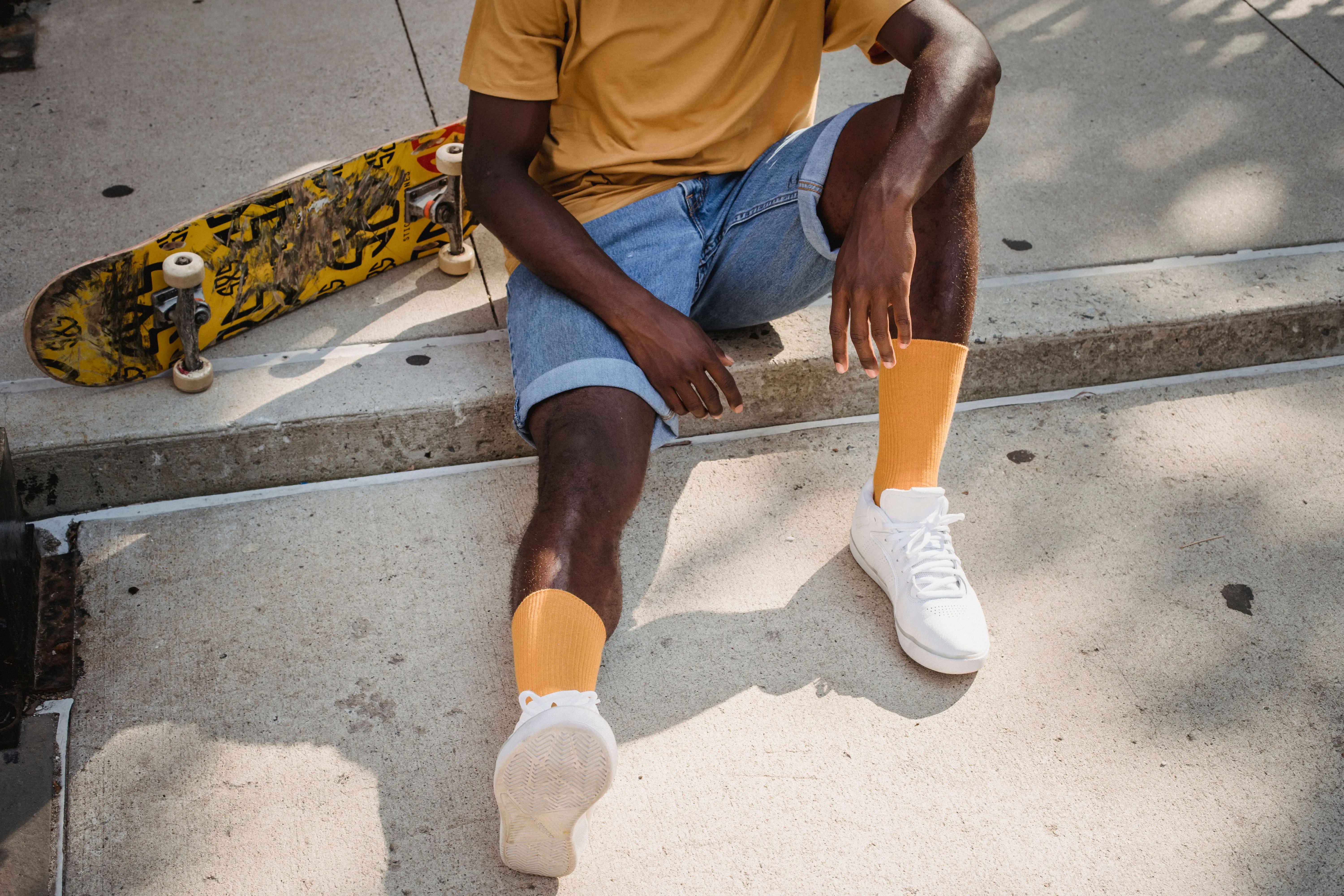
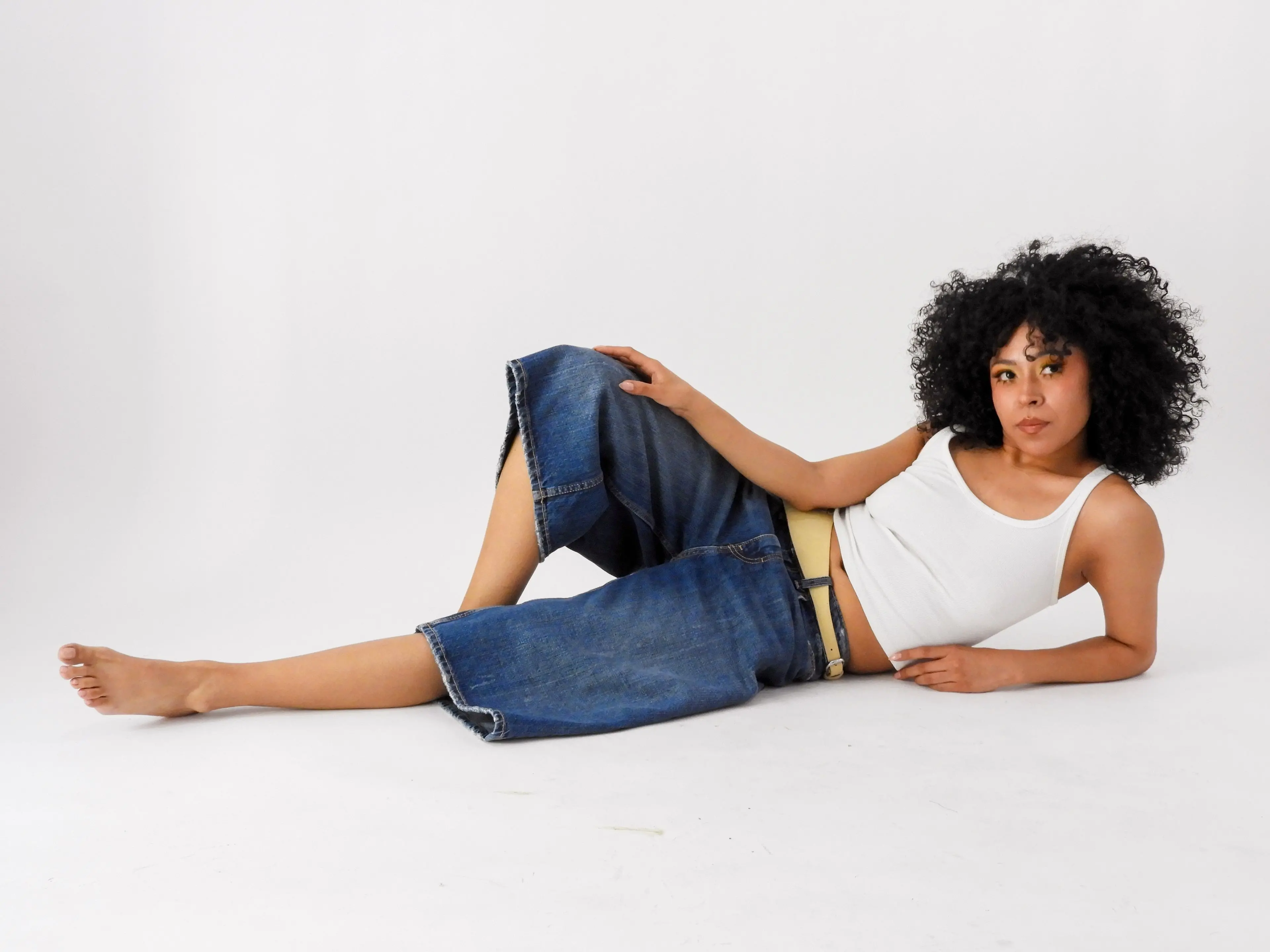
The version of a wide pair of long shorts that most people imagine today came to be popular at the end of 2023 and has been so ever since. For a complete chronological overview, if someone wants to be familiar with how every decade of the history of fashion is reflected in the changes in the look of the jorts and the like, that is more than this post is intended to get into.
Are jorts still trending, or already peaking? What the data shows
Most articles writing about the topic of the trend of jorts are just guessing. Here, let us look at the statistics.
Search and social momentum over the trailing months
Jorts was an instant search success in 2025; some of the tracking tools even tagged it as a breakout word with growth in the thousands of percent year over year.
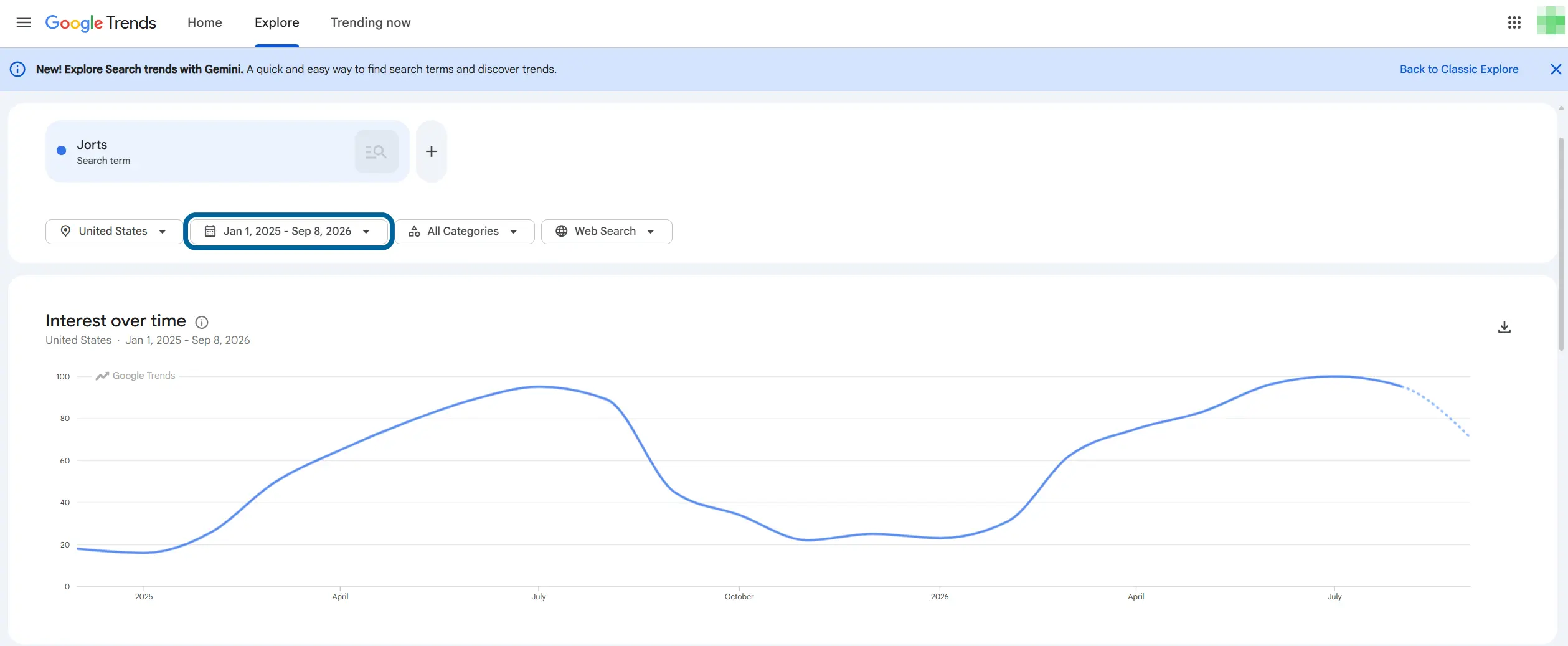
This kind of huge growth is usually a result of a single, very popular moment. Usually the trend wouldn't last, and the product would be gone. However, jorts did not disappear after the initial boost. Instead, search volume started to follow a repeating pattern: rising every spring, peaking around May and June, then falling steadily into fall. The same shape was repeated in 2026, and again this year the peak came close to the one in 2025.
A keyword that jumps once and then disappears is a fad. A keyword that jumps and then repeats the same seasonal fluctuation without any change for two years in a row is a good indication of stable, constant demand!
Which sub-style is winning
Actually, buyers, apart from searching just for "jorts", are categorizing them in various ways that are obvious:
- long wide legs - covering the knee or only slightly above it; roomy from the thigh upwards. It is the type of style that brings most of the growth today.
- High-rise; clean wash - a cropped top or tucked shirt; it is for the consumers who consider jorts as put together rather than throwback.
- Distressed and torn edgings - tears, frays, raw edges. It is consistent demand, but the demand is slightly smaller than the clean one.
- Short cutoffs and Daisy Dukes - older, shorter type of style. Search interest here stays flat to negative, while that for the long-leg style keeps climbing.
You are most likely to pick wide-leg, knee-length style since, from the point of view of current demand on the basis of keywords, this one is the safest option!
Where demand is concentrated
Jorts in their earlier stage of development were associated primarily with the difference between the Midwest and the coasts.
Jorts were considered to be the fashion of the so-called "Dad" in the Midwestern parts of the US, but those living on the coasts were viewing jorts much more ironically or seeing them as a fashion statement.
That said, in recent times the gap has closed to the extent that mainstream retailers are offering jorts at various locations across regions and pricing points. Moreover, the style has crossed over into the continent of Europe, with several fast-fashion chain stores even stocking the product line year-round rather than as a limited-time-only drop.
Platform-wise, the interest is leaning toward video and image search. It is quite a few buyers come across jorts via these mediums, and then they are guided further to look up using descriptive terms such as the color of the jeans, length of the rise, or type of hem.
Who's already selling jorts, and at what price point
Jorts are not a vacuum in the market anymore. Every other season, there is a jorts item among the products of virtually all kinds of retailers, from the cheap fast-fashion brands to the top-tier high-end denim brands.
Snapshot of who's carrying jorts, and the price spread
| Tier | Typical retailers | Price range |
|---|---|---|
| Budget / fast fashion | Mass-market chains, own-label denim | $20-$45 |
| Mid-market | Contemporary brands, denim-focused labels | $50-$90 |
| Premium/designer | Higher-end denim houses | $120-$250+ |
The majority of the product offerings center around the mid-price level, which is approximately $60 to $80, if one wishes to get a pair of wide-leg cotton denim shorts in a five-pocket design.
Whitespace check—crowded already, or still room to move first.
Jorts are a busy sector but not overcrowded yet. Most of the products are similar, with the use of the same few descriptive words like "wide leg", "high waist", and "vintage wash". However, only a few vendors focus their listings on newer sub-styles that consumers are really looking for, such as wash color specifics or hem finishing styles. That is the niche where a new listing can get noticed right away, even in a product category that is already competitive.
Trend lifecycle—where jorts sit right now
As a result of the search, retail spread, and sub-style split shown above, jorts can be judged to have moved beyond the initial phase and be currently at a continuous and even increasing level. While the rate of growth has reduced from the initial breakout spike, it is clear that the seasonal peak is neither dwindling nor fading. The chart shows that it is a climbing path towards a peak, so it is neither in an early phase nor declining. Only after a new record is set by a style that surpasses the previous seasonal highs will one be able to count it as having passed its peak, which in this case it hasn't.
Should you stock jorts right now? What to do with this data
If deciding to include jorts in your shop, lifecycle stage would give you the only clear solution: this is an ideal period to try, and if your trial sells well, then this is a firm commitment period.
- Order your first test purchase through a stockist if you're just starting in the world of jeans. For example, get one or two pairs in the right size of wide-leg knee-length shorts rather than a large collection.
- You should expand production or at least increase volume if you already have denim shorts in your products. It is the sales data that supports such action - instead of just producing experimental batches, you should make seasonal collections available.
- Promote a complete outfit as you introduce products. Since this look will drive most demand, you should show the wide-leg cut along with a cropped top or an oversized T-shirt.
- Use tags that reflect the specific features of a product. Besides the word "jorts," include wash color, rise (high or low), and hem styles (raw or clean) in your headings and tags because it is this set of details that makes customers search for their items.
How Garmio tracks trends like this
That kind of product analysis, seasonal search patterns, breakdown of sub-stylings, and pricing benchmarking is exactly the kind of thing that you can expect to find from Garmio's Trend Finder and Competitor Monitor tools. You won't guess which areas of your niche are gaining momentum - instead of just guessing, get the same search and sales data that we have used to back such insights for any product category you plan to enter.
FAQ
What are jorts?
Jorts are denim shorts, the abbreviation for "jean shorts." It's the term now generally used for a particular style of longer, wider, and very loose-fitting denim shorts as opposed to short and tight-cut ones.
Is the jorts trend still growing in 2026?
According to the search volume statistics, the trend of jorts shows the same seasonal pattern repeated each time. In every case, the peak has occurred in the same calendar season, spring, and this peak has not decreased relative to the previous year's peak. Thus, one might conclude that this style is gaining momentum rather than fading out.
What's the difference between jorts and regular denim shorts?
"Denim shorts" is the big category, while "jorts" usually stand for a longer, wider cut that ends almost at the knee, rather than short or fitted styles.
Are long jorts the same as cutoffs or Daisy Dukes?
Definitely not so! Cutoffs or Daisy Dukes styles are shorter styles, often made by cutting off a pair of jeans. Long jorts are knee-length or above, but even so, they very rarely are DIY ones, and almost always it's an already finished product bought at a store.
Related Reading
- How to Scale Brands with Organic Virality and Garmio's Trend Data
- How to Find Profitable Fashion Niches with Competitor Data
- Stuck at a 1.5% Conversion Rate? 5 Fast Ways to Turn "Window Shoppers" into Buyers with Visual Style
- AI for Fashion Brands: How to Choose the Right Retail AI Solution to Scale in 2026
Written by Garmio
Garmio provides fashion market intelligence for sellers who need clearer product, trend, influencer, and competitor signals before making inventory decisions.
Editorial note: This content supports research and decision-making. It does not guarantee sales, forecasts, fit outcomes, return reductions, or business results.