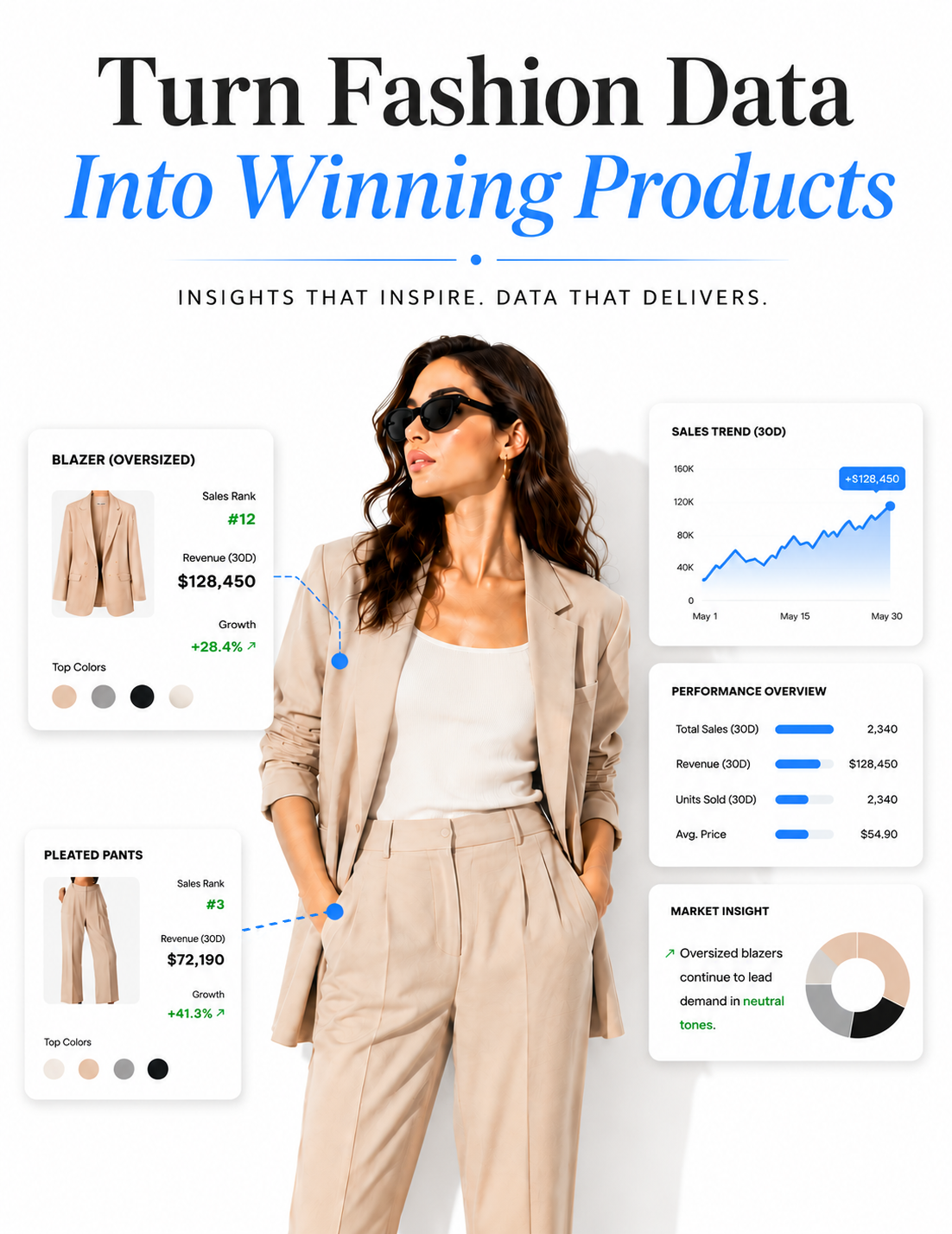

Retail blank products are the most cost-effective way to get a brand started. Print-on-demand keeps a startup's expenses to almost zero. There is one limitation, however. Each seller on the same platform will choose from essentially the same blank hoodie or tee. Your product differentiation is the top graphic only, not the underlying product shape. Fashion silhouettes are the true drivers of brand personality. A small team without a full in-house designer used to work around it, but it became much easier with the introduction of AI fashion design tools at the early design phase.
It is exactly these fashion AI design tools that enable you to turn generic blanks into really cut-and-sewn items without ruining your budget that we are going to explore now.
The Ceiling on Blanks and Print-on-Demand
The advantage of using blank products lies in the fact that with the beginning of the business, you simply choose from several hoodie or tee styles, get your design printed on it, and you make it available for sale. This way, you can get your shop running with zero investment in a production factory relationship very fast.
The downside of it shows up once you wish to have a genuine identity. A blank item is of a fixed shape. You may change color, print, and trim of the product, while there is no way to alter sleeve length, shoulder drop, or hem length.
The following are the features that remain static for a blank:
- The way and type by which the garment is made
- The same fitting of sizes for a brand product
- The first impression to shoppers, the silhouette of a garment before seeing the description
In all possible cases, the customers are not able to know the difference between ten similar products in ten shops, with the same blank hoodie but different prints on its surface; in all these cases they look like being of the same shape. It is the limit. Getting past this requires cutting and sewing, when the design itself is yours.
What Cut and Sew Actually Means for a Small Brand
Cut and sew means making clothes by cutting and sewing fabrics according to a brand pattern. The fabrics are cut by a factory according to that pattern and sewn into a finished product.
Why It Used to Be Out of Reach
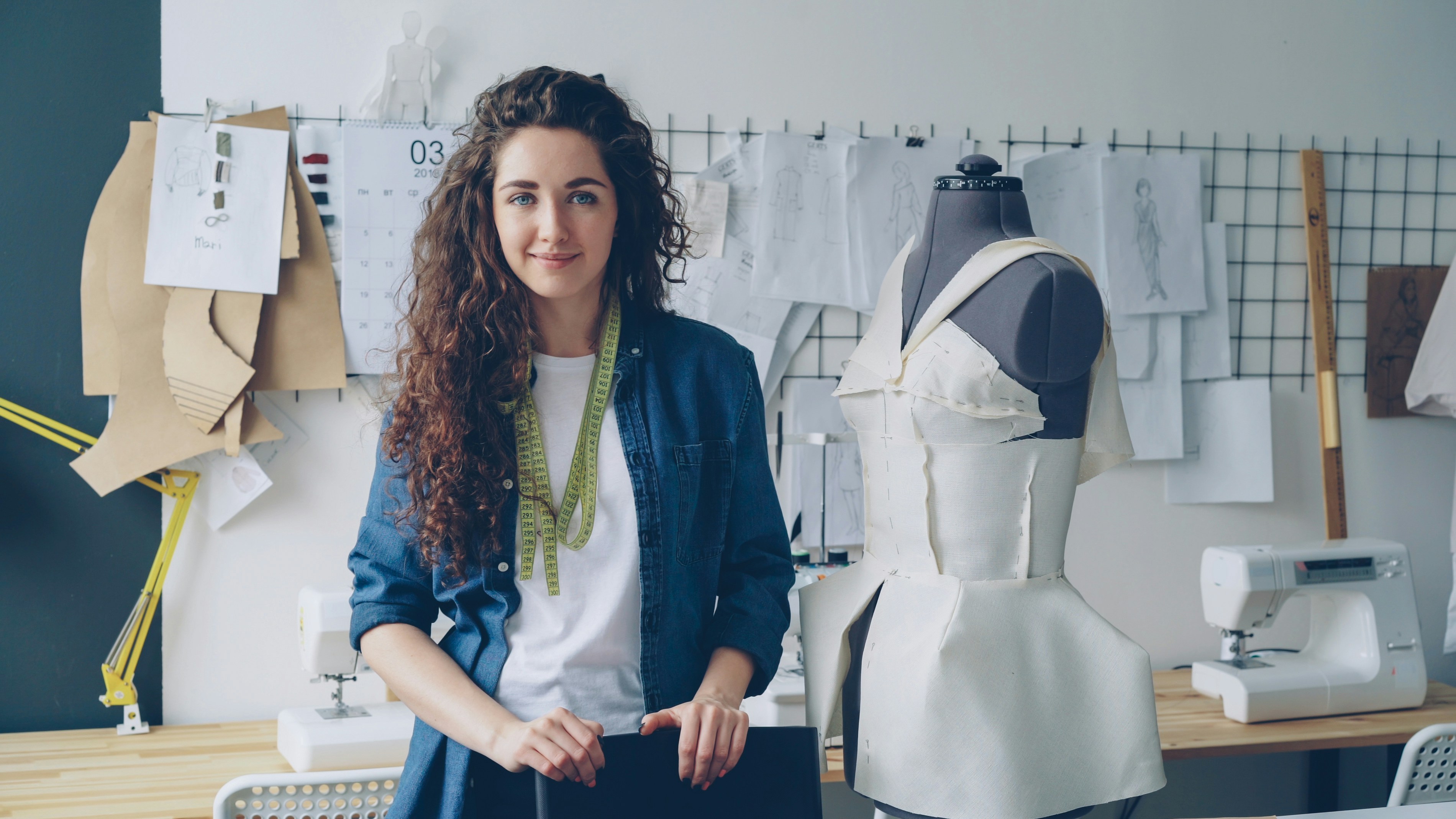
Small brands would often forego cut and sew because they had other good reasons. The process was slow and expensive:
- A design drawing costs about $150 -$400 per clothing style; this amount is not the price of the finished item,
- The sample round cost an extra $100 to $400 each, while most brands had at least a couple of rounds before they could agree to a fit,
- A tech-pack document that describes in detail what a factory produces is prepared after several days, and it still contains the possibility of being revised several times with added cost,
Considering the above list, for a small startup it is quite easy for a single piece of clothing to accumulate around $600 -$1500 development costs, which could be the reason to skip this production route altogether.
How AI-Assisted Style Redesign Shortens That Path
Computer vision in the fashion industry is one way of getting back on track. Search interest in the term went down by 75% in three months, meaning there are few brand holders who are actively shopping for this sort of tool at this moment. Software platforms that use these features can analyse a garment you refer to or a trend and come up with a style outline much faster than a person can sketch a design from scratch.
The following is an honest picture of what it will help and what it will not help you do.
The functions it supports:
- Analyse a product silhouette reference and create the variation proposals for the designer to choose from;
- Convert a confirmed trend into a crude style outline the manufacturer can follow;
- Lead the tech pack stage forward, and some platforms can do it today in minutes, whereas before it was at the days scale.
What it can't replace:
- Someone designing with all the garment elements - the construction, the seam allowances, and the grading- being a specialist in a very narrow area;
- Physical sampling with real fabric in the body shop;
- Fit adjustments when fabric and person get a chance to move together;
Keep in mind fashion AI software as a fast drawing tool for the idea stage only but not a finalized construction. It does let you go from an initial thought to a comprehensive briefing pretty fast. The pattern maker and the sample room still have their jobs.
A Practical Workflow You Can Follow
The design department is not needed for running this process. Below is a workflow designed primarily for small teams.
- Discover and verify a silhouette style trend before proceeding. Don't guess at the wants of shoppers. Refer to trends and categorize your data first before assigning design time for a shape.
- Brainstorm with a few style variations. Leverage AI tools to transform a proven trend into a few tangible directions, and thereafter, as a group, pick one to go ahead with.
- Hire your small-batch manufacturer. Having a more defined starting point makes the requirements clearer, which in turn limits the number of rounds of communication between you and the factory.
- Create and check a limited quantity. At this stage, the human touch is still required. Get your order placed in small batches, have your garment tried on by real people, and get your alterations done in time for making an order for full production.
In a sense, every step is eliminating the risk involved in making a decision from the earlier step. That is actually the main benefit and not simply avoiding the traditional method of manufacturing.
Budget Realities: Where the Costs Actually Land
Actually, this whole method is cheaper now than before. Still, it costs something and is not instant couture. Understand the real numbers as your guide.
| Cost Area | Blanks / Print-on-Demand | Cut and Sew (Small Batch) |
|---|---|---|
| Design time | Low, template-based | Faster with AI-assisted concepts, still needs human review |
| Pattern making | None | $150 to $400 per style, one time |
| Sample rounds | None | 2 to 3 rounds, roughly $100 to $400 each |
| Minimum order quantity | Often none | Usually 50 to 300 units per style |
| Per unit production cost | Varies by print method | Roughly $15 to $80 per unit, depending on complexity |
| Inventory model | Print on demand | Held inventory, produced in batches |
A more detailed briefing will help you avoid unnecessary sample rounds. This is mostly what you will save by getting a faster ideation stage. Of course, there still will be the patternmaking charges, minimum order fees, etc. It is a good idea to budget around $3,000 to $10,000 for samples, setup, and the production of a small-batch run in case a limited cut-and-sew collection catches you off guard.
Where This Fits With Dropshipping vs Owned Inventory
On the traditional level of integration, dropshipping won't play too well with a cut-and-sew model. A dropship vendor carries an extensive list of ready-made products they can ship out immediately. You will not be able to add a custom design to their collection, even if there is a space for it; after all, you invented it.
Production of garments by custom cut and sew basically means:
- Producing a custom order or a limited batch of items,
- Carrying out your own inventory of items or letting a third fulfillment entity do the job for you,
- Laying out an order flow plan which will be based on inventory instead of an individual-margin basis.
As for the company which is fully dependent on dropshipping at present, you could think of your cut and sew line as another track which is a bit different in terms of business strategy and operations. Begin experimenting with one or two styles so that you slowly shift your whole line to owned inventory rather than being a completely drop-shipped brand.
Frequently Asked Questions
Is cut and sew production realistic for a small or new brand's budget?
Yes. A clear brief cuts down the number of samples needed. But cut and sew is still more expensive than ordering blanks. And you have to hold stock, rather than dropshipping.
What is the real difference between customizing a blank and doing cut and sew?
With a blank, only decoration is yours. Cut and sew means you own the pattern. So you can compete on shape, not just decoration.
How does AI-assisted style redesign fit into this process?
AI helps identify trends and creates new styles. This happens before the factory gets the brief. It assists with design work. But it cannot make patterns or samples.
Do I still need a pattern maker and sample rounds if I use AI tools?
Yes. Fit and sewing need samples made physically. AI helps plan and makes specifications faster, sometimes from days to minutes. But factories need real people and fabric.
Can I dropship cut and sew products?
No. These are made to order or in small quantities and stored as inventory. Custom shapes aren't in the catalogs of dropship suppliers.
Related Reading
- How to Scale Brands with Organic Virality and Garmio's Trend Data
- How to Find Profitable Fashion Niches with Competitor Data
- Micro-Collections Made Easy: How Garmio Helps You Design and Source Fast with Low MOQ Suppliers
- The Hidden Math of Fashion Pricing: How to Price Your Products at 4x COGS (and Actually Sell Out)
- How to Source High-Quality Micro-Collections (and Stop Wasting Money on Low-Margin Print-on-Demand)
Written by Garmio
Garmio provides fashion market intelligence for sellers who need clearer product, trend, influencer, and competitor signals before making inventory decisions.
Editorial note: This content supports research and decision-making. It does not guarantee sales, forecasts, fit outcomes, return reductions, or business results.